COMPOSABLE APPLICATION - aPaaS
Compose Enterprise Applications Around the Way Your Business Works
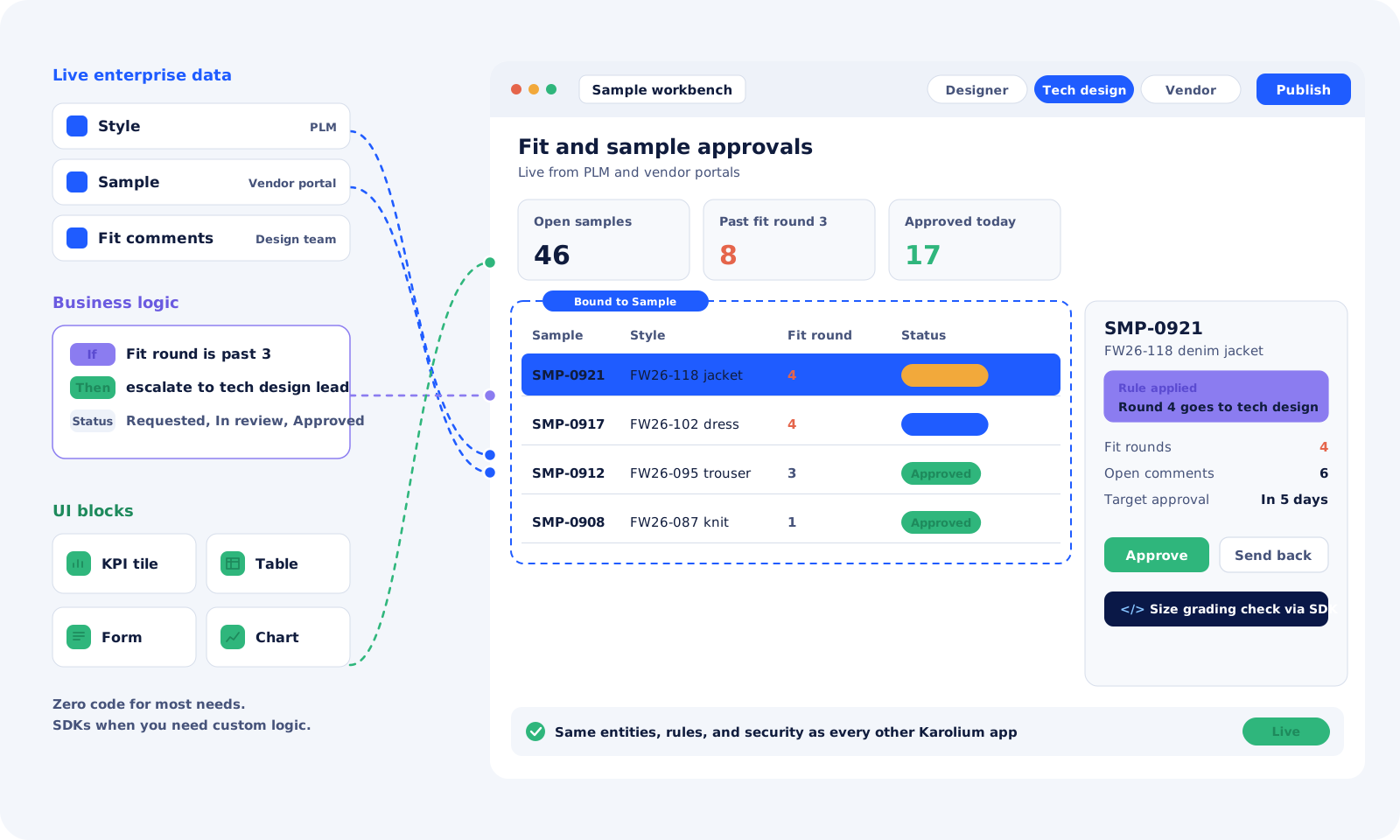
Build and evolve enterprise applications without forcing your processes into rigid software. Build operational workbenches, exception portals, and role-based workflows in days. Karolium Application Composition lets you bind live enterprise data, business logic, and UI blocks onto a single visual canvas – with zero code for rapid delivery and modern SDKs for custom logic.
SaaS Point Solutions Won't Adapt
You buy software for 80% fit, but your competitive advantage lives in the other 20%. Changing a field or adding a custom approval requires vendor feature requests or awkward workarounds.
Traditional Low-Code Hits a Wall
Most "no-code" builders are just pretty form builders. The moment you need bidirectional ERP sync, complex status state machines, or legacy security policies, the tool falls apart.
Full-Stack Development Is Too Slow
Spinning up a new microservice, backend database, authentication pipeline, and React frontend takes months just to test a single operational workflow.
Karolium Takes a Different Approach.
Instead of starting every application initiative from a separate technology stack, organizations can compose applications on a shared enterprise foundation where data, business logic, workflows, integrations, and governance already work together.
WHAT CAN YOU COMPOSE
Compose Applications Around Real Business Processes
Business Data & Models
Define the information your processes actually need. Configure business entities, data structures, relationships, validations, and models that reflect the requirements of the application.
Business Logic & Rules
Define the business rules, validations, services, and business logic required to make applications work according to operational requirements.
Workflows & Processes
Build workflows and operational processes that connect users, activities, approvals, rules, events, and system actions.
User Experience Composition
Create forms, pages, dashboards, reports, and other user experiences around the needs of different business and operational users.
Integrated Application Experiences
Connect applications to enterprise systems, APIs, data, workflows, and business services so applications operate as part of the broader enterprise rather than in isolation.
Reusable Business Capabilities
Leverage common platform capabilities across multiple applications and business initiatives rather than creating separate technical foundations for each one.
One Platform. Multiple Ways to Build.
Everyone works on the same platform foundation without creating another application stack for every business requirement.
- Applications aligned to actual business processes
- Faster response to changing requirements
- Better visibility into operational processes
- Less dependence on rigid application structures
- New business capabilities without starting from zero
- Reusable enterprise platform foundation
- Reduced application and technology fragmentation
- Less redevelopment of common capabilities
- Consistent governance and security
- Existing systems remain useful
- Greater control over application evolution
- Native integration architecture
- Modular application composition
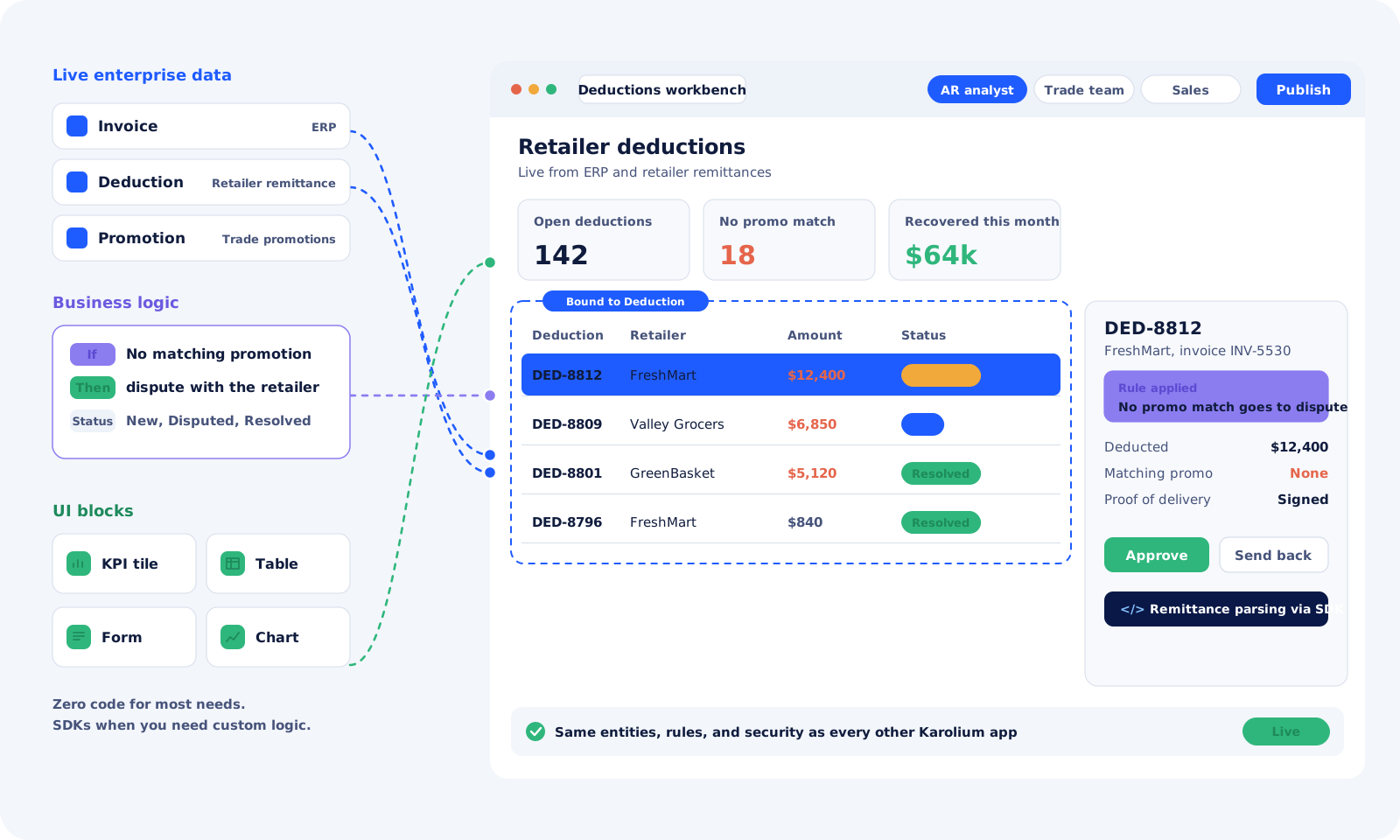
- Zero Code foundation for common requirements
- SDK extensibility for specialized requirements
- APIs and integration capabilities
- Reusable platform services
- Ability to build real enterprise applications without recreating the underlying platform
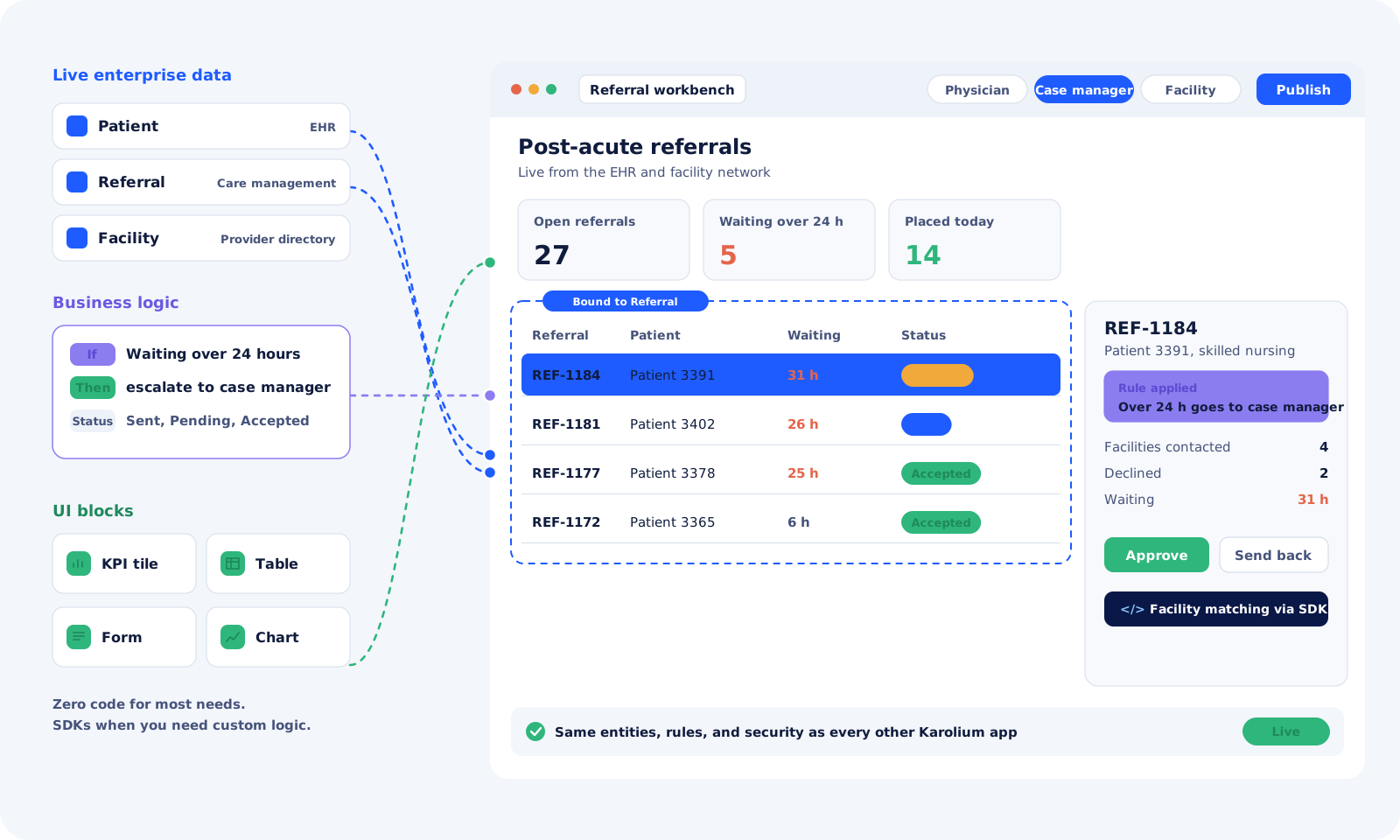
APPLICATION COMPOSITION ACROSS THE ENTERPRISE
One Platform. Countless Ways to Compose.
These are not separate technology purchases. They are composite business solutions sharing the exact same entity definitions, integration endpoints, and governance models. They can be composed using the same underlying Karolium foundation.
Supply Chain & Logistics
Warehouse Operations
Procurement & Vendor Governance
Manufacturing & Shop Floor Execution
Customer & Partner Collaboration
Dynamic Inbound/Outbound Control Towers, Carrier Performance Monitors, and Exception Workflows.
- Architecture Reuse: Leverages shared shipment entities and live EDI/API connectors already integrated with your ERP.
Yard Management Check-ins, Dynamic Cross-Dock Routing, and Inventory Discrepancy Workbenches.
- Architecture Reuse: Inherits real-time WMS location data, barcode scanning services, and inventory validation rules.
Supplier Onboarding Portals, Automated PO Variance Resolvers, and Contract Milestone Approvals.
- Architecture Reuse: Connects into central vendor master data, financial validation logic, and shared document storage.
Work-in-Progress (WIP) Tracking Stations, Quality Assurance Audits, and Maintenance Dispatch Consoles.
- Architecture Reuse: Ties directly to equipment telemetry streams, shift schedules, and operational incident logs.
Secure External Portals, RMA Exception Management, and Real-Time Service Tracking Views.
- Architecture Reuse: Applies fine-grained role-based security (ABAC) over internal entities to expose safe, self-service interactions.
Build the Application Your Business Actually Needs
Don’t force your business into another rigid application. Compose what you need. Connect what you have. Extend when required. Keep evolving.