THOUGHT LEADERSHIP
Contract Manufacturing Business: Cost-Effective Production & Expert Solutions
10 min read · Written by Karolium
EXECUTIVE SUMMARY
Amidst intense business competition, organizations continually pursue innovative strategies to streamline operations, decrease expenditures, and prioritize their core competencies. One strategy that has gained significant traction across various industries is contract manufacturing. But what exactly is it, and how can it benefit your business?
Contract manufacturing, often referred to as outsourcing manufacturing, is essentially an arrangement where a company (the “contractor” or “brand owner”) partners with another company (the “contract manufacturer” or “CMO”) to produce components, parts, or fully assembled products. Instead of investing heavily in building and maintaining their own manufacturing facilities, companies leverage the expertise, capacity, and resources of specialized contract manufacturers.
Think of it as hiring a highly skilled, specialized team to handle the manufacturing side of your business. You provide the blueprints, specifications, and sometimes even the raw materials, and the CMO takes care of the production process, ensuring quality and efficiency.
THE FOUNDATION
Multifaceted Benefits of Contract Manufacturing
While cost reduction is often the primary driver for adopting contract manufacturing, the benefits extend far beyond just saving money. Why are companies turning to this strategy?
Cost Optimization
This is the most obvious advantage. CMOs, particularly those in regions with lower labor costs, can significantly reduce production expenses by 70-80%. Moreover, you avoid the substantial upfront investment in factories, machinery, and personnel. This frees up valuable capital for other strategic initiatives like research and development, marketing campaigns, and sales team expansion.
Laser Focus on Core Competencies
Imagine freeing up your internal teams from the day-to-day grind of manufacturing. Contract manufacturing allows you to do just that. By outsourcing production, you can concentrate your resources and talent on your core strengths – product innovation, brand building, customer relationship management, and strategic decision-making.
Unlocking Scalability and Flexibility
Market demand can be unpredictable. Contract manufacturers provide access to scalable production capacity, allowing you to rapidly ramp up or scale down production based on market fluctuations without being constrained by fixed assets. This agility is crucial in today’s fast-paced business environment.
Access to Specialized Expertise and Cutting-Edge Technology
Contract manufacturers often possess specialized knowledge, advanced manufacturing technologies, and industry-specific experience that your company may not have internally to improve productivity by up to 30%. This access to expertise can lead to improved product quality, enhanced efficiency, and faster innovation.
Accelerated Time to Market
Speed is critical in getting products to market. By leveraging the CMO’s established infrastructure and experience, companies can significantly shorten product development and launch cycles, gaining a competitive edge.
Risk Mitigation
Manufacturing inherently involves risks, such as equipment obsolescence and fluctuating material costs. Contract manufacturing allows you to share these risks with the CMO.
Global Expansion Made Easier
Partnering with a CMO located in a strategic region can provide access to local supply chains, distribution networks, and market knowledge, making global expansion more seamless, allowing reach to new markets.
Streamlined Inventory Management
Contract manufacturers also offer inventory management services, further reducing the burden on your internal operations.
MARGIN IMPACT
Navigating the Challenges: Understanding the Risks
Loss of Direct Control
Outsourcing manufacturing means relinquishing some degree of direct control over the production process. This can potentially impact product quality, lead times, and responsiveness to urgent requests.
Communication Gaps
Language barriers, cultural differences, and time zone disparities can create communication challenges, hindering effective coordination and collaboration.
Maintaining Quality Standards
Ensuring consistent quality control is paramount, especially when working with overseas CMOs. This requires establishing robust quality control processes, conducting regular inspections, and implementing clear communication protocols.
Protecting Intellectual Property
The risk of intellectual property (IP) theft or unauthorized disclosure is a significant concern. Thoroughly vetting potential CMOs, implementing robust legal agreements, and using secure data transfer methods are crucial for safeguarding your IP.
Supply Chain Vulnerabilities
Over-reliance on a single CMO can expose your business to supply chain disruptions caused by unforeseen events like natural disasters, political instability, or economic downturns.
Ethical Considerations
Maintaining your brand reputation requires ensuring ethical labor practices and environmental compliance at the CMO’s facilities. Regular audits and adherence to ethical sourcing guidelines are essential.
Unforeseen Costs
Unexpected costs, such as tooling charges, engineering changes, or rework, can arise during the manufacturing process. Clear communication, detailed contracts, and proactive cost management are key to mitigating these risks.
Dependencies and Minimum Order Quantities
Becoming overly dependent on a single CMO can limit your negotiating power and flexibility. Additionally, CMOs often have minimum order quantities (MOQs), which can be challenging for startups or companies with low production volumes.
Navigating Trade Regulations
International contract manufacturing can be subject to tariffs, trade regulations, and political risks that can impact costs and lead times. Understanding and navigating these complexities is crucial.
Finding the Right Partner: A Strategic Selection Process
Define Your Needs:
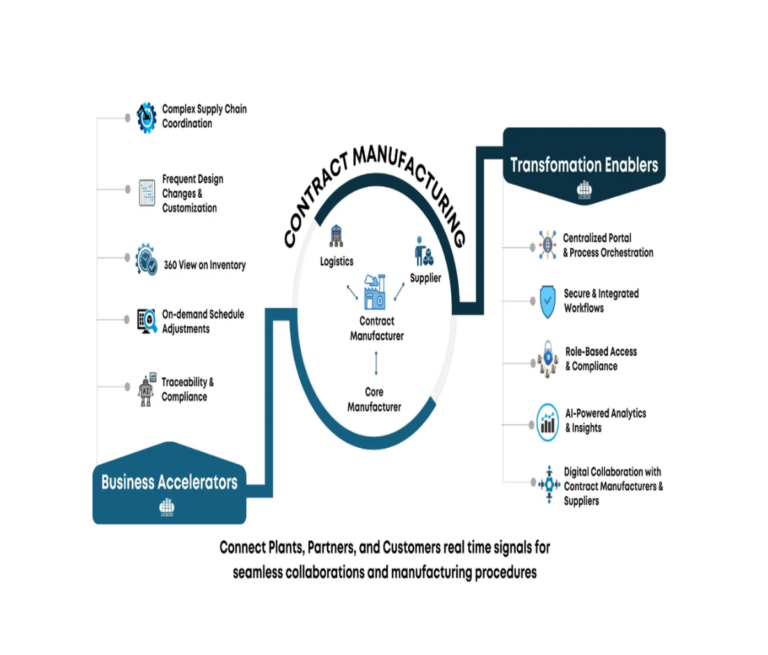
Start by clearly defining your product specifications, quality standards, production volumes, delivery timelines, and budget constraints. This stage is analogous to setting up a centralized core manufacturing process portal where clarity in process outputs and the overall strategy should take focus.
Identify Potential CMOs
Conduct comprehensive research to identify potential CMOs with the necessary expertise, capabilities, and capacity to meet your requirements. Use diverse resources such as online directories, industry associations, trade shows, and referrals to build an overarching platform.
Screen and Evaluate Thoroughly
Assess each CMO’s technical capabilities, experience in manufacturing similar products, quality control processes, financial stability, communication skills, geographic location, and ethical sourcing practices. Seek real-time supplier collaboration and ensure end-to-end supply chain traceability and compliance. Don’t hesitate to request and check references from other clients. .
Request a Detailed Quotation
Issue a detailed Request for Quotation (RFQ) to shortlisted CMOs, outlining your product specifications, quality requirements, production volumes, and delivery timelines. This enables AI-powered demand forecasting for smarter procurement.
Analyze and Compare Quotations
Carefully compare the quotations from different CMOs based on price, lead time, quality, and other relevant factors, just as Karolium connects plants, partners, and customers.
Visit the Facilities
Conduct site visits to the shortlisted CMOs’ facilities to assess their capabilities, processes, and quality control systems firsthand. This is akin to seeing the actual production facility, central DC, and regional DC operations.
Negotiate the Terms
Negotiate pricing, payment terms, delivery schedules, quality standards, and intellectual property protection to establish a secure & integrated workflow.
Develop a Comprehensive Contract
Conduct a pilot production run to validate the manufacturing process and ensure that the CMO can meet your required quality standards and production volumes to ensure a real-time contract manufacturing schedules & output.
Start with a Pilot Run
Conduct a pilot production run to validate the manufacturing process and ensure that the CMO can meet your required quality standards and production volumes to ensure a real-time contract manufacturing schedules & output
Monitor and Evaluate Ongoing Performance
Continuously monitor the CMO’s performance, including quality, delivery, and communication, to ensure they are meeting the agreed-upon standards. Use AI-powered analytics & insights and enable a digital collaboration with contract manufacturers for real-time monitoring. Regular audits and performance reviews are essential for maintaining a successful partnership.
The Future of Manufacturing & Adapting to Trends
The contract manufacturing landscape is rapidly evolving, shaped by critical trends. Sustainability, driven by consumer demand for environmentally friendly products and ethical sourcing, is now a core consideration. Simultaneously, advanced technologies like automation, robotics, and additive manufacturing (3D printing) are revolutionizing the industry, enhancing efficiency and fostering innovation.
Several other factors are influencing the future of contract manufacturing: a rising interest in reshoring and nearshoring to mitigate supply chain risks; the integration of data analytics and artificial intelligence for optimized processes and quality control; increasing specialization among CMOs to offer expertise in niche sectors; and a growing emphasis on supply chain transparency and traceability, leveraging technologies like blockchain. These trends are collectively reshaping how companies approach manufacturing outsourcing, demanding a focus on adaptability and responsible practices.
CONCLUSION
A Strategic Enabler for Growth
Contract manufacturing offers a powerful strategic approach for companies seeking to optimize operations, reduce costs, and focus on their core competencies. While it presents potential challenges, a proactive approach to risk management, a thorough selection process, and a commitment to open communication can pave the way for a successful partnership. By embracing the benefits of contract manufacturing and adapting to the evolving trends in the industry, Karolium can enable your business new opportunities for growth, innovation, and competitiveness in today’s dynamic global marketplace. Request for demo today.